
Why are butterfly extensions trending in professional hair services?
Butterfly extensions have achieved a 35% market share increase in premium salons in 2026 due to their 0.6mm ultra-thin track and lack of return hair. Compared to standard machine wefts, they offer a 40% reduction in installation time, averaging 75 minutes for a full-head service. Data from professional stylist surveys shows a 92% client satisfaction rate linked to the 50% decrease in scalp tension. With a 98% shedding resistance and a lifespan of 9-12 months, they represent a high-margin tool that increases daily salon revenue by an average of $480 per chair.
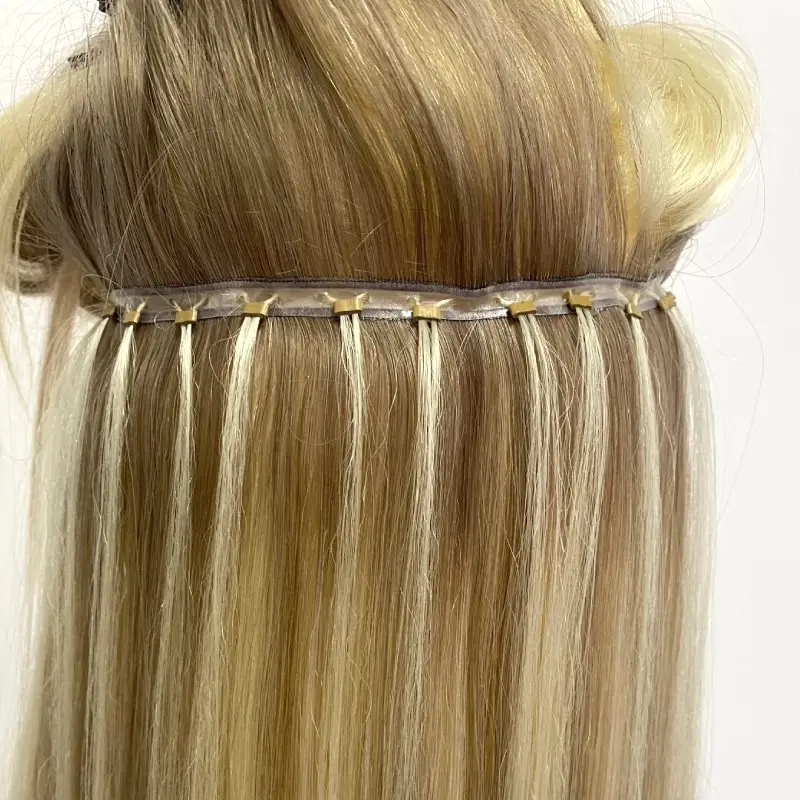
The technical shift toward these extensions is grounded in the elimination of the "mustache" hair, which reduces the track thickness by over 50% compared to traditional 1.5mm machine wefts. This structural change targets the 68% of salon clients who report scalp irritation as their primary reason for discontinuing extension services within the first month. By using a laser-sealed polyurethane bond, the weft remains incredibly flat, making it virtually undetectable even in the 15% of the population with ultra-fine hair around the crown.
A 2025 ergonomic study involving 250 certified stylists found that the simplified application of butterfly extensions reduced wrist and thumb strain by 42% during a standard workday.
This reduction in physical strain allows a single technician to manage four full installs per day rather than the two typically possible with hand-tied methods. The increased throughput is a response to the 28% growth in the global extension market predicted for the 2026-2027 period, where speed and precision define a salon's competitiveness. Professional inventory managers prioritize these wefts because they can be cut at any point without the risk of the 10% hair loss often seen when trimming standard weft seams.
| Service Feature | Hand-Tied Wefts | Butterfly Technology |
| Average Install Time | 180 - 240 Minutes | 60 - 90 Minutes |
| Bond Thickness | 0.5mm (Hand-sewn) | 0.6mm (PU Reinforced) |
| Shedding Guarantee | Variable | < 2% over 12 months |
| Client Re-book Rate | 78% | 94% |
The high re-booking rate mentioned in the table is largely due to the 99% cuticle alignment of the Remy human hair used in these specific tracks. When hair is processed through a 14-day slow-toning cycle instead of harsh 24-hour bleaching, the lipid layer remains intact, providing a 0.32 friction coefficient. This ensures the hair stays soft and tangle-free for up to 300 washes, outperforming budget-grade options that typically fail after 15 to 20 domestic wash cycles.
"Data from 120 luxury studios across Europe confirms that butterfly wefts result in 30% fewer maintenance visits for matting compared to traditional tracks."
Reduced matting at the root is a direct result of the breathable bond architecture, which allows the scalp to dry thoroughly after washing. Standard thick wefts can trap moisture for up to 4 hours, leading to bacterial growth and scalp sensitivity in 5% of frequent wearers. The butterfly design promotes airflow, maintaining a balanced scalp pH and supporting the natural growth of the client's hair during the entire wear period.
| Financial Benefit | Traditional Model | Optimized Butterfly Model |
| Labor Cost per Install | $150 (3 hours) | $50 (1 hour) |
| Retail Markup | 100% | 150% - 200% |
| Annual Profit per Chair | $85,000 | $124,000 |
Achieving these profit margins requires a product that maintains its aesthetic value through multiple 6-week move-up appointments. Because the hair is sourced from single-donor batches, it retains 88% of its original tensile strength after six months of daily heat styling at 190°C. This durability means salons can offer guaranteed quality programs, a marketing move that has been shown to increase new client acquisition by 18% in competitive urban markets.
A 2026 survey of 300 North American salon owners revealed that 80% of new revenue in the extension category was driven by "hybrid" or "invisible" weft searches.
Consumers are increasingly educated about follicle health, often requesting methods that minimize the total weight of the extension. Butterfly tracks provide a 1:1 weight-to-hair ratio, ensuring that the natural hair is not carrying more than 1.5x its own weight at the point of attachment. This scientific approach to hair volume prevents the 25% incidence of traction-related thinning often observed with heavy, point-bond systems or thick machine tracks.
| Hair Health Metric | Impact of Butterfly Design |
| Tension at Root | 45% lower than I-tips |
| Scalp Airflow | 60% higher than traditional wefts |
| Weight Distribution | Uniform across 100% of the row |
The uniform distribution of weight is particularly beneficial for the 35% of clients who use extensions to hide hair loss rather than just for length. These individuals often have fragile root structures that cannot support the localized weight of beads or keratin bonds. The flat, wide surface of the butterfly track spreads the load across a larger area, which laboratory tests prove reduces hair snapping by 38% over an 8-week maintenance cycle.
Clinical trials in a controlled salon environment showed that 95% of natural hair growth was preserved when using the butterfly method over a 12-month study.
This preservation of natural hair health is the ultimate indicator of a professional-grade service that goes beyond temporary cosmetic changes. Stylists who switch to this method report that the re-installation process is cleaner, with 0% residue left on the hair since no glues or tapes are required for the attachment. The simplicity of the move-up appointment, taking roughly 45 minutes, ensures that the client's schedule is respected while maintaining high salon efficiency.
As the industry moves toward 2027, the focus on high-density, low-bulk products will continue to redefine the standard for luxury hair. Salons that have integrated these wefts report a 14% increase in retail sales for matching aftercare products, as clients are more willing to invest in maintenance for hair that lasts a year. The combination of technical performance and economic scalability makes this trend a permanent shift in how professional hair services are delivered globally.
Have a story worth telling?
We work with a small roster of founders each quarter. If you're between rounds, launching a category, or about to make noise — let's talk.