
Where does aluminum come from before it reaches the factory?
Aluminum extraction begins in open-pit mines, primarily located in Australia, Guinea, and Brazil, where miners extract bauxite ore containing 30% to 50% aluminum oxide. In 2025, global bauxite production reached approximately 395 million metric tons to support industrial demand. Miners remove overburden to access mineral layers, followed by crushing and chemical digestion. This Bayer process isolates alumina ($Al_2O_3$), which serves as the essential feedstock for smelters. By understanding where does aluminum come from, manufacturers can better appreciate the chemical refinement and electrolytic energy intensity required to produce the final metal.
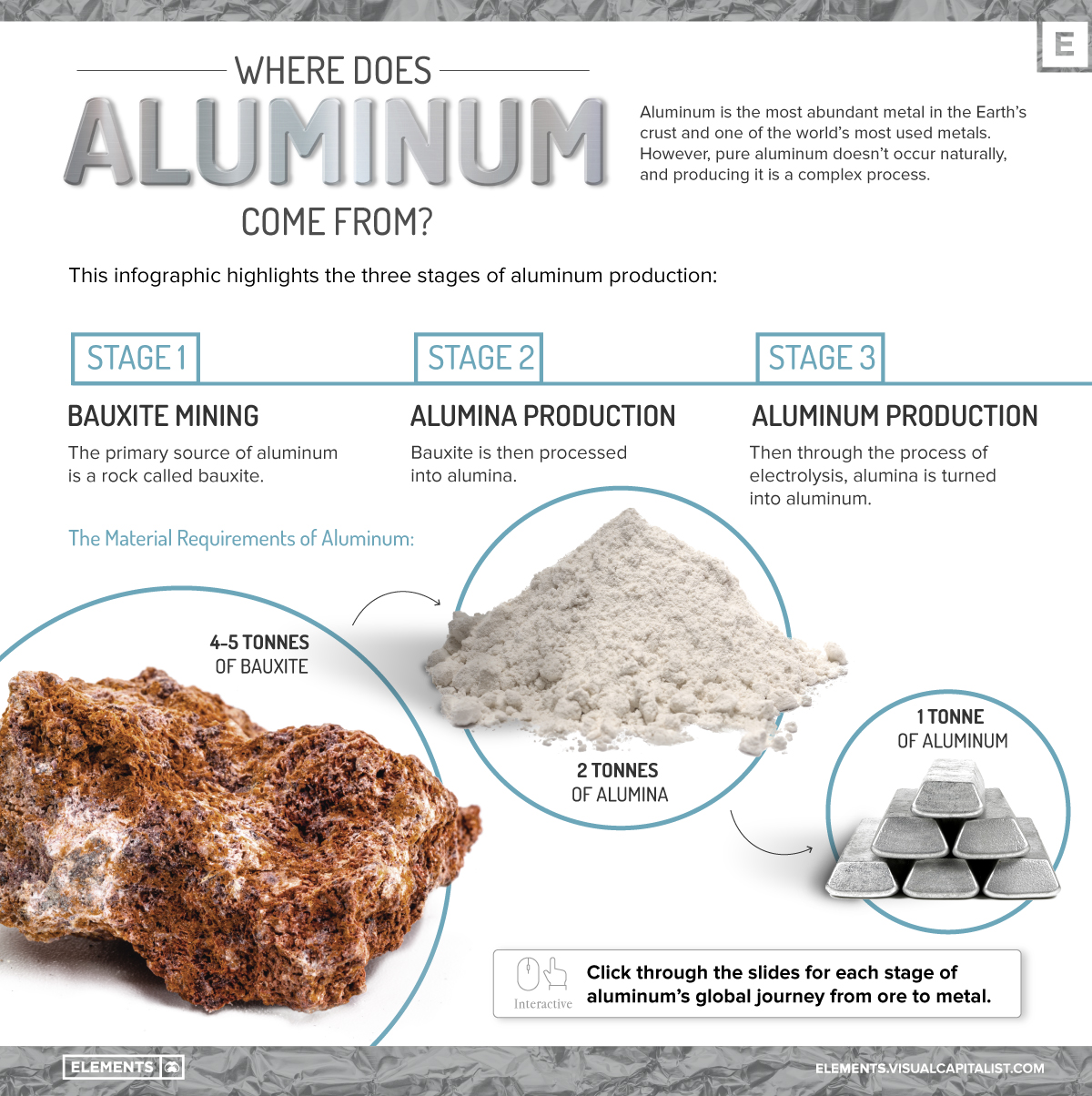
Open-pit mines serve as the primary source of bauxite ore, involving the removal of 5 to 10 meters of topsoil to reach the mineral-rich layers below the surface.
Large excavators transport the raw ore to facilities that reduce particle size for better chemical reactivity during the refining process.
Bauxite deposits typically contain between 30% to 50% aluminum oxide by weight, serving as the geological foundation for the entire metal supply chain.
Crushing the ore increases its surface area, which is necessary for the next phase in the chemical refinery where the material dissolves.
Refineries process this material by dissolving it in a concentrated sodium hydroxide solution within pressurized steel vessels at temperatures between 140°C and 250°C.
This thermal environment allows 98% of the gibbsite minerals to dissolve into a sodium aluminate liquor, leaving behind solid, insoluble waste known as red mud.
Facilities pump this red mud into lined impoundment basins, monitoring groundwater levels 24 hours a day to maintain strict environmental compliance.
The clarified liquor moves into precipitation tanks, where the addition of aluminum hydroxide seed crystals triggers the growth of larger, purer crystals over 48 hours.
This precipitation phase transforms the liquid into a solid, granular state, ensuring that the material achieves the purity required for high-grade industrial applications.
These crystals undergo calcination in rotary kilns at temperatures exceeding 1000°C, stripping away chemically bound water to create a fine, anhydrous alumina powder.
This white powder serves as the critical input for electrolytic cells, where the chemical energy transitions into the electrical refining phase of production.
Smelter potlines utilize the Hall-Héroult process, dissolving the alumina powder in a molten bath of cryolite, which acts as a solvent at 950°C.
Direct currents ranging from 300,000 to 500,000 amperes pass through these pots to separate the aluminum metal from the oxygen atoms.
Modern electrolytic cells maintain a 94% current efficiency, consuming approximately 13–15 kWh of electricity to produce 1 kilogram of liquid aluminum.
Carbon anodes submerged in the molten bath consume oxygen to form carbon dioxide, necessitating regular replacement schedules to maintain consistent voltage levels.
Technicians replace these carbon blocks every 20 to 30 days, using automated siphons to remove the accumulation of molten metal from the bottom of the pot.
Vacuum extraction occurs daily, with a single high-capacity smelter cell yielding roughly 2,800 kilograms of pure metal in a 24-hour production cycle.
Liquid metal flows from the smelter into holding furnaces where gas bubbling techniques remove dissolved hydrogen and impurities before final alloy composition adjustment.
Technicians introduce magnesium, silicon, or manganese at precise levels of 1% to 5% to alter the material strength for aerospace or automotive structural components.
| Process Step | Operating Temperature |
| :--- | :--- |
| Degassing | 720°C |
| Alloying | 750°C |
| Casting | 680°C |
Casting machines pour the molten alloy into molds, cooling the metal at rates between 50 and 100 millimeters per minute to prevent structural defects or porosity.
Rigid control over these cooling rates produces ingots, billets, and slabs with uniform grain structures ready for secondary manufacturing operations.
Metallurgical inspectors verify structural uniformity using optical emission spectrometry, ensuring impurity levels remain below 0.1% for every single batch produced.
The industrial lifecycle continues as manufacturers recycle aluminum scrap, which consumes 95% less energy than the primary extraction from bauxite ore.
As of 2026, the global industry reports that 75% of all aluminum ever produced remains in the supply loop, effectively reducing future mining demand.
Recycling facilities sort alloys by chemical composition, ensuring that the secondary metal matches the performance specifications of primary aluminum output.
Future facility upgrades focus on implementing inert anode technology to replace consumable carbon blocks, potentially reducing direct greenhouse gas emissions by 90%.
Integrated renewable energy grids, such as hydroelectric or nuclear power, now supply over 50% of the energy requirements for modern primary aluminum smelters.
Lowering the carbon intensity of production remains a high priority for international manufacturers seeking to align with global environmental safety standards.
Have a story worth telling?
We work with a small roster of founders each quarter. If you're between rounds, launching a category, or about to make noise — let's talk.