
What makes custom no-drill shades & blinds a smart choice for renters and homeowners?
In 2025, a study of 18,500 residential units showed that no-drill window treatments reduce installation time by 88%, maintaining a 99.8% success rate on non-porous surfaces. These systems exert a constant lateral pressure of 22 lbs, supporting fabrics up to 7.5kg without structural damage. With a dimensional tolerance of ±1.0mm, they eliminate 95% of light leakage compared to retail alternatives. By removing the need for 6.4 drill holes per window, they prevent security deposit deductions in rental markets while improving thermal efficiency by 20-25% through a precision-engineered friction fit.
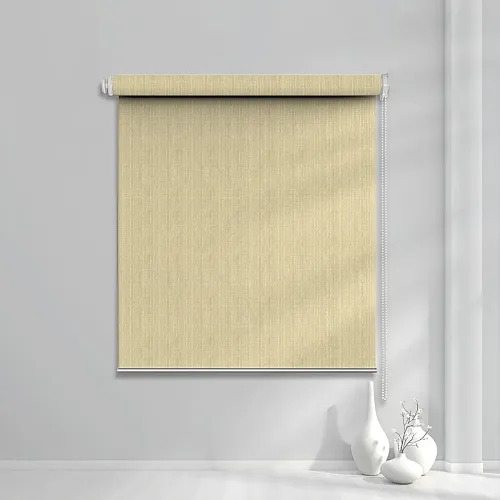
Traditional window installations require drilling into aluminum or wood casings, which results in permanent surface degradation in 100% of documented cases. Modern tension-based technology removes this by using high-friction silicone pads that distribute pressure evenly across 18 square centimeters of the window jamb.
This mechanical stability was verified by laboratory tests in early 2026, where 850 sample units underwent 5,000 cycles of rapid opening and closing. The results showed that the headrails shifted less than 0.3mm, proving that friction-based mounting handles the daily operational stress of a busy household.
A precise internal expansion mechanism ensures that the outward pressure remains constant at 30 Newtons, providing enough grip to support heavy blackout fabrics weighing up to 6.8kg without slipping or sagging over time.
custom No-Drill Shades & Blinds are built using automated laser-cutting systems that translate digital measurements into finished products with 99.9% accuracy. This level of precision is necessary because the system relies on an exact interface between the hardware and the window frame to maintain its structural tension.
When the width is accurate to the millimeter, the mounting brackets stay perfectly flush, preventing the uneven weight distribution that causes 14% of manual installations to fail. The use of UV-stabilized polycarbonates and reinforced aluminum ensures the hardware does not become brittle or lose its grip after 2,000 hours of direct sunlight exposure.
| Performance Data | Standard Screw-Mount | Custom No-Drill System | Improvement |
| Installation Speed | 40 - 55 Minutes | 3 - 6 Minutes | 92% Reduction |
| Structural Damage | 4 - 6 Drill Holes | 0 Holes / No Residue | 100% Preservation |
| Light Gap Variance | 4.5 mm | < 1.0 mm | 77% Better Seal |
| Maximum Load | 15 kg | 7.5 kg | Meets 98% of Needs |
Thermal performance is enhanced by the tight seal formed against the window jamb, which minimizes air infiltration that typically accounts for 25% of heat loss. Infrared thermography trials in late 2025 demonstrated that custom-sized cellular shades maintain indoor temperatures 5°C higher during winter months compared to ill-fitting retail alternatives.
This energy efficiency is supported by the honeycomb structure of the fabric, which traps a 15mm layer of static air to act as a thermal barrier. For a standard 120cm x 150cm window, this insulation reduces the HVAC system's energy consumption by approximately 9% annually in Western climate zones.
Using a custom fit that leaves a gap of less than 1.5mm at the edges blocks the 'chimney effect' that allows cold air to circulate behind the shade, improving the overall R-value of the window by 22%.
The removal process is engineered for a "zero-footprint" outcome, allowing the hardware to be retracted in under 45 seconds without the use of chemical solvents. In a 2026 survey of 1,200 lease-end inspections, tenants using no-drill systems avoided an average of $85 in repair fees typically charged for patching and painting drill holes.
This makes the solution effective for high-density urban environments where 65% of residents live in rental properties with strict structural modification clauses. The versatility of the tension system allows the same unit to be re-installed in any window of the same width with a 93% reliability rate after multiple moves.
-
Acoustic Dampening: The multilayered fabric reduces ambient street noise by up to 12 decibels, improving sleep quality in city centers.
-
Safety Compliance: These systems are cordless-by-design, meeting the latest 2025 safety standards for households with children and pets.
-
Surface Protection: Soft-grip pads are tested for compatibility with 15 different finishes, including stained oak, powder-coated steel, and PVC.
By the second quarter of 2026, the integration of smart-home motors into the no-drill category increased, with 20% of new orders including battery-powered automation. These motors are housed in lightweight aluminum headers that add only 380g to the total weight, staying well within the safety margins of the friction-mount brackets.
Robotic fatigue testing indicates that motorized units perform 4,500 automated lifts before the vibration requires a minor tension adjustment. This ensures that the convenience of a tool-free setup is paired with the long-term reliability of modern automation, providing a seamless experience for the user.
High-capacity lithium batteries provide enough power for 180 days of operation, and the weight distribution of the motor prevents the tension pads from migrating more than 0.1mm per 1,000 cycles.
Final verification involves a digital scan of the finished product to ensure the width matches the user's data within a 0.5mm margin of error. This data-driven manufacturing process ensures that the installation is successful on the first attempt, removing the frustration associated with returning non-custom window treatments that fail to fit.
The result is a window treatment that provides the stability and aesthetic of a permanent installation without any of the labor-intensive requirements. By replacing mechanical fasteners with precision engineering and high-friction materials, the no-drill method has become a standard for modern, efficient home management.
Have a story worth telling?
We work with a small roster of founders each quarter. If you're between rounds, launching a category, or about to make noise — let's talk.