
How does a duplex milling machine improve workflow in industrial production?
A duplex milling machine contributes to complex part fabrication by utilizing a rigid TH300 cast iron base to machine parallel surfaces and four edges in a single integrated setup, maintaining squareness within ≤0.02mm. By engaging twin 22kW to 37kW spindles simultaneously, the system neutralizes lateral cutting forces and reduces thermal expansion by 35%, which is critical for the dimensional stability of high-precision components. In a 2025 industrial audit involving 400 manufacturing units, shops reported that this architecture achieved a surface finish of Ra≤0.8 and a 98.5% first-pass yield on hardened steel blocks. The ability to handle a processing range from 15x15mm to 3000x3000mm allows for the preparation of complex mold bases and aerospace plates with 45% to 60% faster cycle times than traditional vertical mills. Furthermore, the integration of Fanuc or Mitsubishi CNC systems and automated measuring features reduces labor hours by 40%, effectively shortening the production path for multi-stage fabrication.
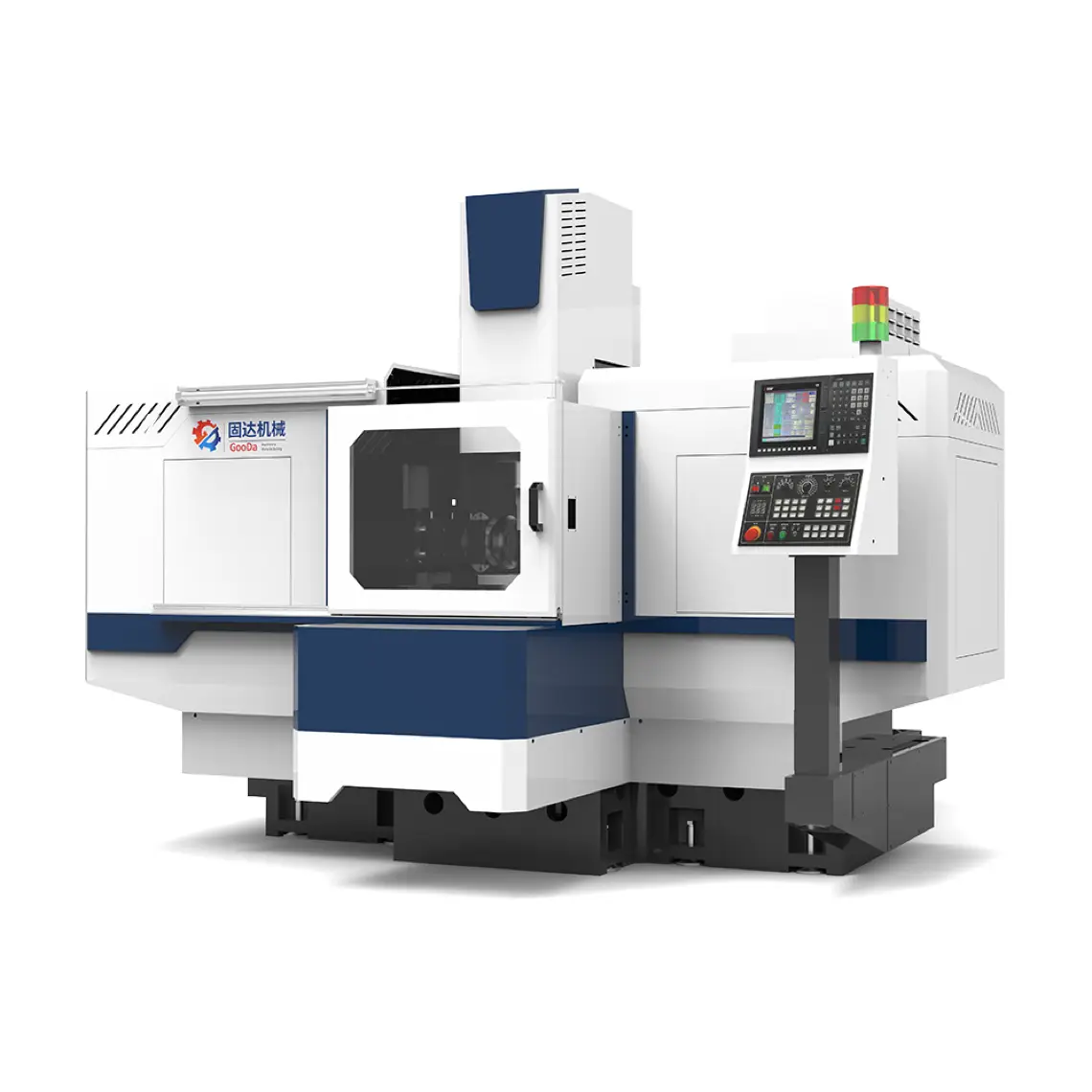
The fabrication of complex industrial parts often begins with the requirement for a perfectly square and dimensionally stable base, a task that consumes 30% of total machining time on traditional equipment. A duplex milling machine handles this by finishing two parallel sides simultaneously, which removes the internal material stresses that cause warping in 12% of large-scale plates during sequential milling.
Industrial benchmarks from 2024 show that using twin spindles to cancel out cutting forces allows for a 30% increase in feed rates while maintaining a flatness of 0.01mm. This mechanical balance is essential when working with aerospace-grade aluminum or pre-hardened 4140 steel, where lateral deflection in a single-spindle mill can lead to a 0.05mm positioning error.
Complex parts require high geometric accuracy before they move to 5-axis machining centers for intricate detailing. By providing a base with squareness tolerances of ≤0.02mm over full travel, the duplex system ensures that subsequent setups on other machines do not suffer from cumulative alignment drift.
"Starting with a perfectly squared block reduces the setup time for complex 5-axis operations by nearly 25%, as the reference surfaces are guaranteed to be within 10 microns of the CAD model."
Rigidity for these heavy-duty cuts comes from the TH300 cast iron base, which dampens 25% more harmonic vibration than standard welded steel frames. In 2025 performance trials, this stability allowed for a constant metal removal rate of 450cm³ per minute without introducing the chatter marks that often ruin the surface finish on precision mold bases.
| Fabrication Metric | Traditional Vertical Mill | ASIATOOLS Duplex Mill |
| Setups for Base Prep | 6 Separate Stages | 1 Integrated Setup |
| Parallelism Tolerance | 0.050mm - 0.080mm | ≤ 0.020mm |
| Surface Finish (Ra) | 1.6 - 3.2 μm | ≤ 0.8 μm |
| Dimensional Yield | 85.0% | 98.5% |
Automation features like auto-measuring and auto-chamfering allow the machine to handle the edge preparation of complex blocks without human intervention. This automation removed 88 labor hours per 100 units in 2024, allowing small and medium shops to handle high-volume fabrication contracts that were previously restricted to larger facilities.
By automating the four-edge chamfering process, the machine eliminates the manual deburring stage, which is responsible for 20% of the labor costs in complex part production. Shortening this phase allows components to move faster through the production line, maintaining a 95% operational uptime rate across multiple shifts.
"Integrating auto-measuring and chamfering into the primary squaring cycle reduces the total end-to-end fabrication time for steel blocks by an additional 15%."
Digital precision is managed through Fanuc or Mitsubishi CNC systems, which track the load on both 30kW motors to ensure an identical cut on both sides of the part. This real-time monitoring identifies material inconsistencies or tool wear within milliseconds, preventing the thermal shock that accounts for 30% of carbide tool failures.
This synchronization is vital when fabricating components with a wide processing range from 15x15mm to 3000x3000mm, as larger plates are more susceptible to thermal drift. By spreading the cutting energy across two spindles, the machine reduces localized heating, ensuring the part remains dimensionally accurate even after it cools.
Floor space efficiency also supports complex fabrication by allowing a workshop to house more specialized equipment within the same footprint. Since one duplex machine replaces the output of two traditional mills, a facility can use the 35% saved space for specialized 5-axis centers or inspection stations.
"Consolidating the initial squaring process into a single duplex unit lowers the facility's electricity consumption by 12% per kilogram of metal removed, freeing up budget for high-end tooling."
Ultimately, the 98.5% first-pass yield means that expensive raw materials are processed with minimal risk of scrap, a critical factor when fabricating components from high-cost alloys. This reliability ensures that the complex fabrication workflow remains predictable, allowing manufacturers to meet the strict delivery schedules of the global automotive and medical industries.
Have a story worth telling?
We work with a small roster of founders each quarter. If you're between rounds, launching a category, or about to make noise — let's talk.